
Gastric Sleeve vs. Gastric Bypass: What’s the Difference — and Which Is Right for You?
If you’re considering bariatric surgery, you’ve likely heard about gastric sleeve and gastric bypass. Both procedures are powerful, life-changing tools for weight loss and improved health — but they work in different ways.
As a robotic bariatric surgeon, I help patients choose the right operation based on their health history, weight-loss goals, and lifestyle. Let’s break down the differences in a clear, patient-friendly way.
What Is a Gastric Sleeve?
Also called: Sleeve Gastrectomy
How it works:
About 75–80% of the stomach is removed
The remaining stomach becomes a narrow “sleeve”
Hunger hormones (like ghrelin) are significantly reduced
No intestines are bypassed
What it does:
Restricts portion size
Decreases hunger
Maintains normal digestion (food passes naturally through the intestines)
Weight Loss:
Average excess weight loss: 60–70%
Steady, reliable long-term results
Often a Good Option For:
Patients who want a simpler operation
Lower BMI patients
Patients without significant acid reflux
Those wanting a shorter operative time
What Is Gastric Bypass?
Also called: Roux-en-Y Gastric Bypass
How it works:
A small stomach pouch is created
Food bypasses part of the stomach and first portion of the small intestine
Gut hormones are altered, improving metabolism and blood sugar regulation
What it does:
Restricts portion size
Reduces calorie absorption
Provides a strong metabolic effect
Often significantly improves acid reflux
Weight Loss:
Average excess weight loss: 65–80%
Often slightly more powerful for metabolic disease
Often a Good Option For:
Patients with type 2 diabetes
Patients with significant acid reflux (GERD)
Higher BMI patients
Those needing more aggressive metabolic improvement
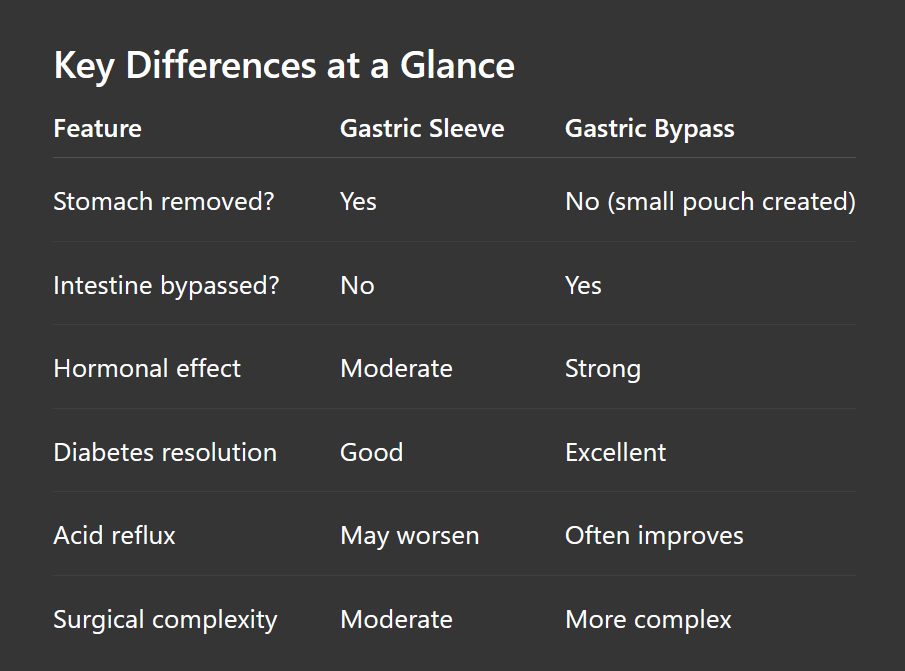
What About Acid Reflux?
This is one of the most important differences between the two procedures.
If you already have moderate to severe GERD, gastric bypass is often the better choice.
Sleeve surgery can sometimes worsen reflux symptoms.
For patients with reflux and hiatal hernia, surgical repair and procedure selection must be individualized.
Choosing the right operation requires careful evaluation and discussion.
What About Safety and Recovery?
Both procedures are:
Performed minimally invasively (robotic approach in my practice)
Typically require a 1–2 night hospital stay
Return to work in 1–2 weeks
Long-term success depends on follow-up and lifestyle commitment
When performed by an experienced bariatric surgeon, both operations are very safe and highly effective.
Which Surgery Is Right for You?
There is no “one-size-fits-all” answer.
The best procedure depends on:
Your BMI
Medical conditions (diabetes, reflux, sleep apnea, etc.)
Prior abdominal surgeries
Eating habits
Long-term goals
Bariatric surgery is not about taking the easy way out — it’s about using the most powerful tool available to regain control of your health.
If you’re considering weight loss surgery and want to know which option fits your situation, schedule a consultation. A personalized evaluation is the best first step toward lasting results.
